Guide for owners of rent-stabilized buildings
What changed in 2019, what applies now, what it did to sales and values, and what it can mean when you sell.
On June 14, 2019, New York enacted the Housing Stability and Tenant Protection Act (Chapter 36 of the Laws of 2019). For owners of buildings with rent-stabilized apartments, it was a ground-shifting change: it capped what those apartments could ever earn, took away most of the ways they could leave regulation, and made the system permanent. Buyers pulled back almost immediately.
This guide is for owners, heirs and co-owners of those buildings, and for the attorneys advising them, especially when a sale is on the table because of a divorce, an estate or a family decision. It covers what changed, what applies now, and what it can mean for a sale.
The table shows the rules as they changed on June 14, 2019. Where a rule has been amended since, the “After” column says what applies now.
| Rent-stabilized apartments | Before June 14, 2019 | After |
|---|---|---|
| Increase when an apartment turns overCh. 36, Part B | Up to 20% | None. Only the Rent Guidelines Board’s lease increases apply |
| Leaving regulation (high rent or high income)Ch. 36, Part D | Possible | Repealed. Apartments lawfully deregulated before June 14, 2019 stay deregulated |
| Building-wide improvements (MCIs), NYCCh. 36, Part K | Up to 6% a year, permanent | Up to 2% a year, removed after 30 years; none in buildings 35% or less rent-regulated |
| Apartment improvements (IAIs)Ch. 36, Part K; HCR Fact Sheet 26 | A share of the cost added to the rent permanently, with no dollar cap | 2019: $15,000 over 15 years, at most 3, removed after 30 years. Since October 17, 2024: two tiers ($30,000, or $50,000 for certain vacant apartments with prior DHCR approval), and the increase is permanent again |
| Preferential rent at renewalCh. 36, Part E | Could rise to the legal regulated rent | Stays for the tenancy; the next tenant can be charged up to the legal regulated rent |
| Overcharge claimsCh. 36, Part F | 4-year lookback | 6 years, with treble damages for willful overcharges; refunding after a complaint no longer avoids them |
Sources: Chapter 36 of the Laws of 2019 (S6458); NYS Homes and Community Renewal overview; HCR Fact Sheet 26.
These apply to residential rentals generally, not only stabilized apartments, including a rented unit in a two-family house.
| Every residential rental in New York State | The rule | What it means for owners |
|---|---|---|
| Security deposits and rent paid in advanceGOL §7-108 | No more than one month’s rent (with limited exceptions) | No more taking several months up front from an applicant with money but damaged credit, which used to reduce the owner’s risk enough to say yes. |
| Turning down applicants over housing court historyRPL §227-f | Not allowed for any past or pending landlord-tenant case | Checking court records and then refusing creates a presumption of a violation. |
| Application and screening feesRPL §238-a | Actual cost of the background and credit check, or $20, whichever is less (waived if the applicant brings a check from the past 30 days) | Screening costs above that come out of the owner’s pocket. |
| Late feesRPL §238-a | $50 or 5% of the monthly rent, whichever is less, and only after 5 days | Little deterrent to paying late. |
When the number of buyers willing to pay for an asset falls this sharply, that is lost equity for every owner of one, even where average prices hold up for a while because fewer owners are willing to sell. The City’s own sales records for buildings with rent-stabilized apartments show both: sales fell first, and prices followed.
NYC Department of Finance sales data compiled by the NYC Rent Guidelines Board: 2020 Mortgage Survey presentation; 2026 Mortgage Survey Report (Appendices 6, 9 and 10; Staten Island excluded).
Sales have picked up since (730 buildings sold in 2025, and the average price per apartment rose 14% that year), but in the same report’s figures the average price per apartment was still well below 2019.
Owners took the State and City to court, arguing that the rent stabilization law, as amended in 2019, was an unconstitutional taking of their property. In one case, owners alleged their buildings lost 20 to 40 percent of their value after the 2019 amendments. The federal courts dismissed those challenges, and the U.S. Supreme Court declined to hear them in October 2023 and February 2024, although Justice Clarence Thomas called the question “important and pressing” (statement). For now, the law stands.
Every building is different, and the specifics are where experience matters most. In general, these are the issues that tend to come up:
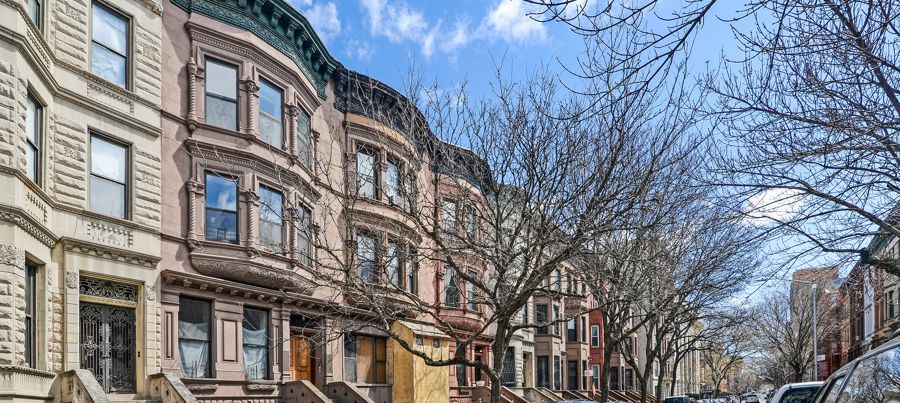
From my files
A fully rent-stabilized four-family in Harlem, two owners divorced close to twenty years, and a closing eight months before this law was signed.
Consider me a resource to help you with your matters, including ones where a listing isn’t likely: values, condition, occupancy and what the market will actually bear. I’m also happy to help families get oriented before they’ve retained counsel, and send them your way. More for attorneys
Before you price it, before you sign with anyone, and before a buyer’s attorney asks for the rent history. 929-400-7653
Generally not through high rent or high income: both were repealed in 2019. Apartments that were lawfully deregulated before June 14, 2019 remain deregulated. There are narrow exceptions, and the facts of a particular building matter.
Not by the old vacancy increase, which is gone. Rent Guidelines Board lease increases still apply, and an apartment with a preferential rent can generally be rented to the next tenant at up to the legal regulated rent.
Six years, with treble damages where the overcharge was willful. If you’re buying or selling a building with stabilized apartments, the registration history is worth a close look early.
The statewide rules on deposits, application fees, late fees and screening apply to residential rentals generally. The stabilization rules apply only to stabilized apartments.
I’m a Licensed Real Estate Broker and a New York State Approved Real Estate Instructor, not your attorney. Here are links to the relevant laws and government resources.
Tell me about the building and the situation. It reaches me directly.
Would you rather just talk? Call 929-400-7653.